¶ Definition
Filament stringing—also called oozing or hairy prints—happens when thin strands of filament are left between parts of a print. This occurs because melted plastic leaks from the nozzle during travel moves when it shouldn’t.
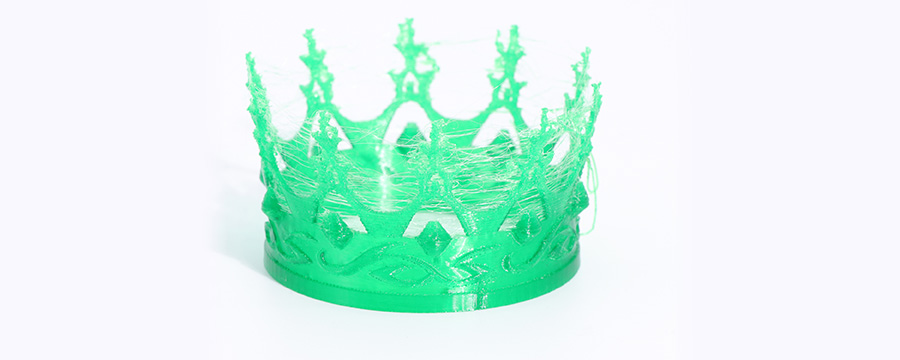
¶ Signs
- Fine hair-like strands between print sections
- Small blobs or zits on surfaces
- Rough finish on travel paths
¶ Root Causes
- High Nozzle Temperature – Filament stays too runny, causing it to drip during travel moves
- Low or Incorrect Retraction Settings – Not pulling enough filament back during travel, leaving pressure in the nozzle
- Moisture in Filament – Steam bubbles push molten plastic out during idle moves
- Slow Travel Speed – Nozzle spends more time over open air, increasing ooze risk
¶ Step-by-Step Solutions
¶ 1️⃣ Dry Your Filament
Moisture in the filament expands into steam in the nozzle, forcing out extra material. Dry hygroscopic filaments such as PETG, ASA, and Nylon before use. Follow recommended drying temperatures and store in an airtight container with desiccant.
|
Filament Type |
Temp (℃) |
Temp (℉) |
Duration |
|
PLA series |
50 |
122 |
7 hours |
|
PETG series |
65 |
149 |
7 hours |
|
TPU series |
70 |
158 |
7 hours |
|
ABS/ASA |
75 |
167 |
7 hours |
|
PC Professional |
75 |
167 |
7 hours |
|
Easy Nylon |
95 |
203 |
7 hours |
¶ 2️⃣ Increase Retraction Distance
More retraction pulls extra filament out of the nozzle during travel. Increase by 0.5–1 mm at a time until stringing improves. Bowden setups usually require more retraction than Direct Drive printers.
¶ 3️⃣ Adjust Retraction Speed
Retracting faster reduces pressure in the nozzle more quickly. Increase retraction speed slightly, and if you notice grinding or jams, lower it slightly.
¶ 4️⃣ Lower Nozzle Temperature
The hotter filament flows too easily and leaks. Reduce the printing temperature in 5–10 °C steps until stringing is minimized, but ensure layer bonding remains strong.
¶ 5️⃣ Increase Travel Speed
Faster travel moves mean less time for the filament to ooze. Raise travel speed to 150–200 mm/s if your printer can handle it without vibration or layer shifts.
¶ 6️⃣ Minimize Long Travel Moves (Optional)
Enable slicer options like Avoid Crossing Perimeters or Combining to reduce open-air travel paths, limiting chances for oozing.
¶ Still Not Solved?
If the issue persists, please contact us anytime at service@overture3d.com.